On August 19, Unitree landed on the STAR Market with an issue price of 150.8 yuan. On the very first day of trading, the stock opened directly at 1,100 yuan, and its market value once reached 444.9 billion yuan.
By September 2, the 11th trading day after listing, the stock closed at 546.02 yuan, having fallen by half from its peak on the first day of trading. After the frenzy of the first day faded, various negative news about Unitree and Wang Xingxing also began to surface.
In just over ten days, Unitree's robots did not suddenly regress, and Wang Xingxing did not suddenly become a different person. What really changed was that the market began to reprice the company.
Last July, I wrote an article titled "Humanoid Robots—An American-Style Cyber Romance." At that time, humanoid robots were at the height of their popularity. I casually posted a skeptical message on Xiaohongshu, and within no time, several people claiming to be engineers in the field came at me with hundreds of words of sarcasm attacking my character, race, and brain development.
So I became even more convinced at the time that this industry was doomed.
Humans invented machines precisely to escape the limitations of the body. Robotic arms don't need legs, AGVs don't need hands, and floor-cleaning robots have no need to stand up and pick up a broom. So, why must machines look like humans?
Stock prices may not be able to settle debates over technical direction, but the fact that the first humanoid robot stock peaked right after listing at least shows that the capital market has begun recalculating that future which had been overdrawn in advance.
Since Unitree hasn't completely cooled off yet, this is actually a good time to dig up the issues I complained about a year ago, ride the wave of attention, and wrap up my earlier judgment.
After all, a year has passed. Although humanoid robots have made headlines many times, some problems have not only failed to disappear, they have become even more obvious.
Performing and actually working are two different things.
They can sing, dance, and do rap; they can run short and long distances, dance yangge, and perform martial arts. They can not only climb onto a fighting ring and kick another company's robot's head off, but they can also shamelessly break the human 100-meter sprint record.
If you only looked at the robots in publicly released videos over the past year, we would seem to be getting closer and closer to The Terminator.
But what about working on an assembly line driving screws? Most of the videos we can see of robots driving screws come from foreign robotics startups, but domestic robots have far fewer videos truly demonstrating the ability to work steadily.
If a robot's athletic ability is the equivalent of its ability to walk to its workstation, then the scenarios where robots truly demonstrate value should be their ability to work once they arrive at the workstation. Whether they can pick the correct component from a pile of parts, control force to plug a connector into a socket, handle occluded objects, and know what to do next after discovering that a part has been placed crooked—these are the most straightforward tests for humanoid robots.
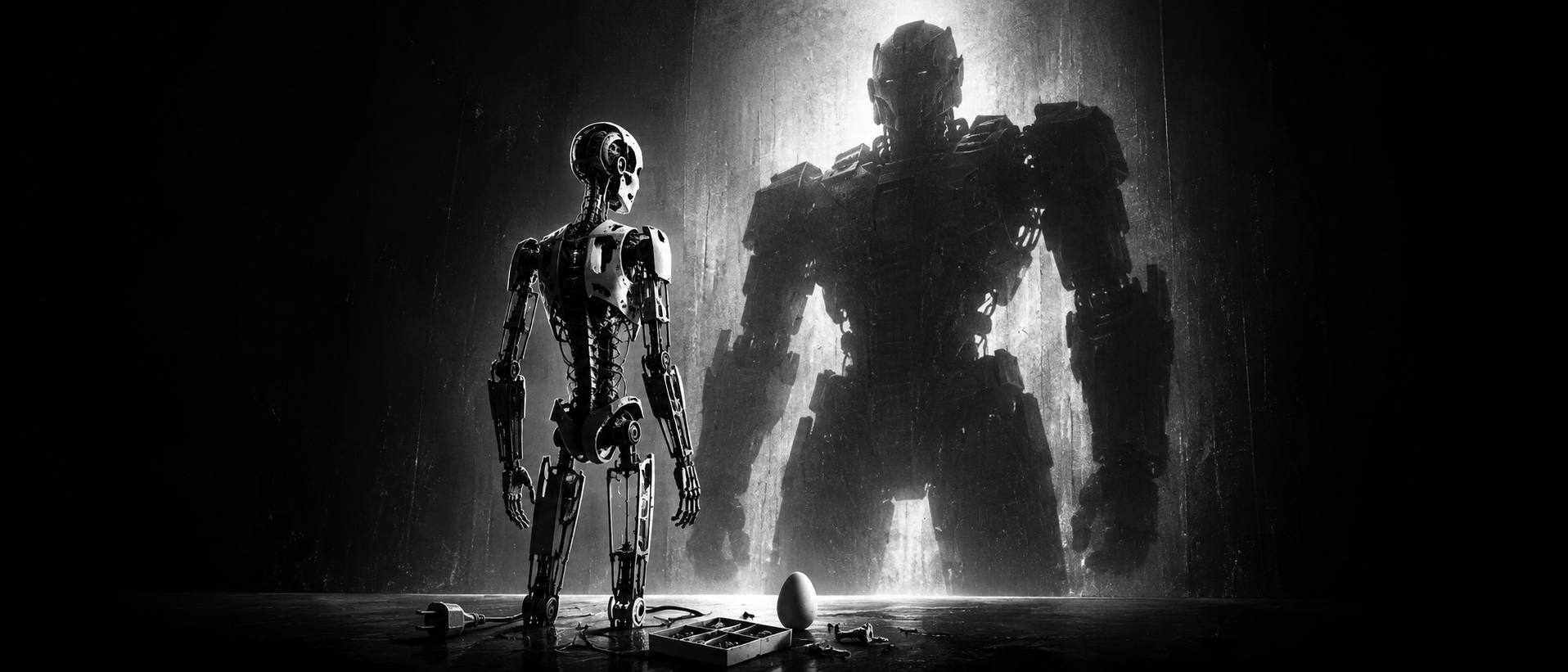
Many demo videos have already proven that our robots, even if they have to fight through fire and brimstone or brave hordes of wild beasts and venomous insects along the way, can still break through in an extremely short time and show up for work on time. But when faced with an egg that cannot be squeezed too hard, what would they do?
That depends on the robot's dexterous hands and embodied brain.
A dexterous hand that imitates the human hand is equipment with dozens of degrees of freedom, extremely sensitive force feedback, clear tactile sensing, and compliant control. It can both pinch a feather and twist open a bottle cap. Throughout this process, the robot's brain is constantly adjusting the force and movement based on the information sent back from the hand.
The hardest part to achieve here is not the shape of the hand, but the coordination between tactile sensing, force feedback, and dozens of degrees of freedom. This is why the dexterous hand has consistently been one of the most expensive and hardest-to-engineer parts of a humanoid robot.
This set of components is both expensive and difficult to make, and what humanoid robots lack is precisely a pair of hands that are cheap and reliable enough, plus a brain that can control them.
After all, the key to "showing up for work on time" is "work," not "on time." The vast majority of us don't need to fight through brambles to get to work.
Would it be okay to stop being human?
Even if one day, the cost and performance problems of dexterous hands and embodied brains are all solved, and humanoid robots really can work like humans, we still need to answer another question.
Why must robots look like humans?
For example, I don't like folding clothes. I could buy a robot to fold clothes for me at home. Or I could hire someone to come by every week to take the clothes away, wash them, dry them, fold them, and bring them back. The difference here is that the robot represents an unknown future, while the latter is a solution that can be implemented today.
The real need has never been to own a robot that does housework, but to live well without doing housework.
Because people didn't want to scrub clothes by hand, they invented the washing machine. Because they couldn't carry heavy items, forklifts, conveyor belts, and AGVs came into being. Because factories need large numbers of screws driven, a robotic arm was fixed in place to drive screws around the clock.
Function determines form. Tools were originally invented to free humans from the constraints of the human body. We should not invent tools that use tools.
The advantage of the human form is that it allows machines to enter the old world directly without having to reinvent everything. But this is only a cost choice. If modifying the environment is cheaper than building a universal robot, then there is no need at all to make machines look like humans.
Warehouses can be redesigned around AGVs, shelves can move on their own, production lines can be laid out around robotic arms, and kitchens can be replanned for automated equipment. Rather than spending 100,000 yuan to teach a robot to open a door designed for humans, just replacing the door would cost less than 1,000 yuan.
I have always felt that the humanoid robot is a very romantic path. Machines don't necessarily have to adapt to the human world; the human world can also begin to adapt to machines.
The distant future, and the immediate reality.
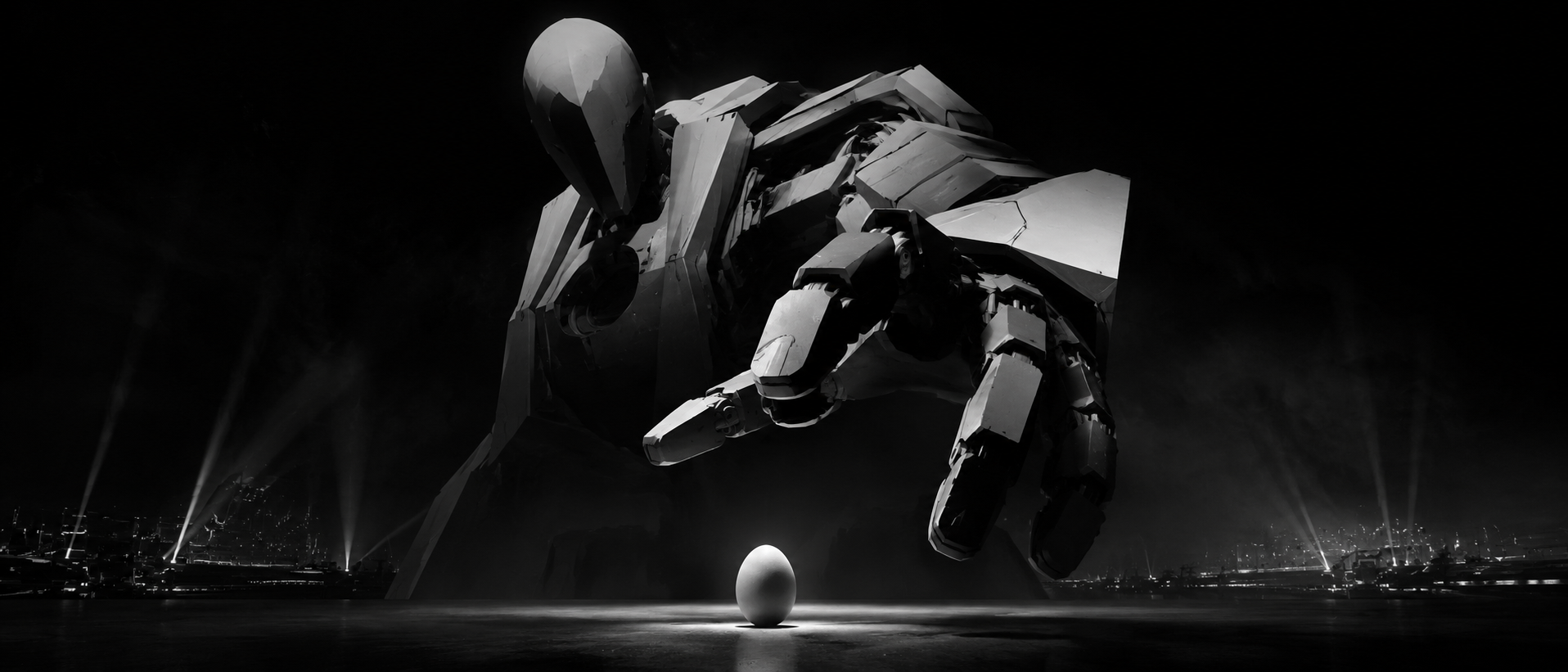
The most fascinating aspect of humanoid robots is precisely the aspect most likely to be overestimated. Like a movie coming to life, a robot that can accompany humans in daily life and help humans with work is exactly the future we can imagine.
We are using already-achieved athletic abilities, and pricing current robots based on a future in which they can enter every household, as if every step a robot takes forward brings us closer to that cyberpunk world.
But reality is far from that. Even the data needed for training embodied intelligence is still being painstakingly collected piece by piece, not to mention the dexterous hands, generalization capabilities, costs, and reliability.
Yet the capital market has already begun pricing that distant future.
As long as you assume robots can eventually enter factories and homes, you can then calculate how many workers can be replaced and how many households will buy one, and a trillion-yuan story is patched together.
The capital market can price robots a decade in advance, but companies ultimately still have to prove their value through today's products. The particular nature of the humanoid robot industry is that between the capabilities that can be demonstrated today and the capability to truly create commercial value, there remains a huge gap, and that gap is currently filled mainly by imagination.
For now, robots have not yet proven they can replace humans, yet they have already found another business model: selling a future story in which they will eventually replace humans.