Earlier this year, OpenClaw suddenly went viral. A guy took on a project using OpenClaw to build digital employees. He asked me what I thought of OpenClaw, and I said it was an engineer's toy with uncontrollable delivery and extremely high maintenance costs.
The guy chuckled mysteriously and hung up.
Everyone knows what happened next. The nationwide movement of raising shrimp rose and fell; I won't go over it again. If you're interested, you can check out my earlier piece, "Why Would You Install OpenClaw?"
Recently, GPT-6 Astra was released, and a bunch of AI self-media started, once again, "collapsing into their chairs, lips quivering, eyes fixed on Astra as it makes garbage 3D models while they feel the apocalypse coming." This scene reminded me of the shrimp farmers from back then—how are they doing now?
In my previous article, I asked why they insisted on installing OpenClaw. Now I'm more curious: for those companies that use AI at scale and intend to replace human labor, after burning through their tokens, what exactly did they get out of it?
Token Consumption Is a Vanity Metric
From promoting the use of Claude Code across the entire R&D team to restricting usage quotas and requiring approvals for going over, this company took only nine months.
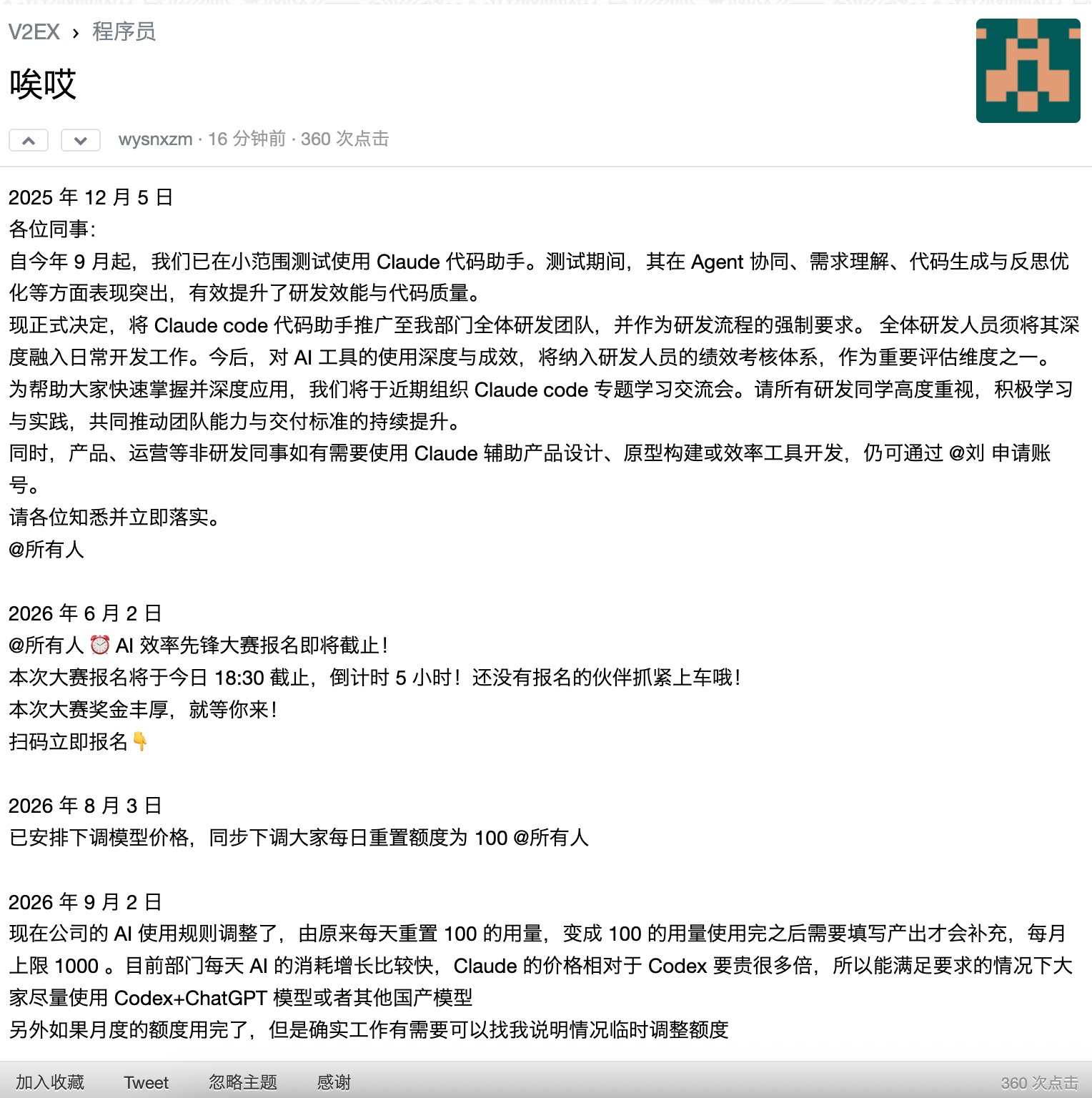
This is a very interesting case. Many companies used to love showing off their token usage, but when AI shifted from a new toy that needed promotion to a productivity tool that required calculating ROI every month, token consumption stopped being something worth bragging about.
This is actually a very normal business process. When AI first enters a company, FOMO-driven leaders care more about whether anyone is using it and whether they're using it deeply enough. So adoption coverage, tool penetration, employee feedback, and internal case studies all become the easiest accomplishments to report. In the end, these metrics land back on employees—whether you've learned AI, how many tokens you've used, whether you've found new implementation scenarios.
Unfortunately, these are all process metrics, not outcome metrics.
You can see something from broader surveys. McKinsey found that 80% of people think AI has made them faster and stronger, but only 37% of respondents said AI had already shown up in their company's profits. Gartner studied the best-performing companies and found a simple commonality: they continuously track ROI, and projects that perform poorly get resources reassigned or are even shut down outright.
Model companies want token usage to grow infinitely, but serious businesses aren't going to go all in on a whim. Raw token usage is just a vanity metric performed for outsiders, and many companies end up moving themselves with their own performance.
But after the frenzy, everyone has to stare at their token bills with trembling lips and rethink "the meaning of life."
Before AI Replaces People, It First Replaces Thinking
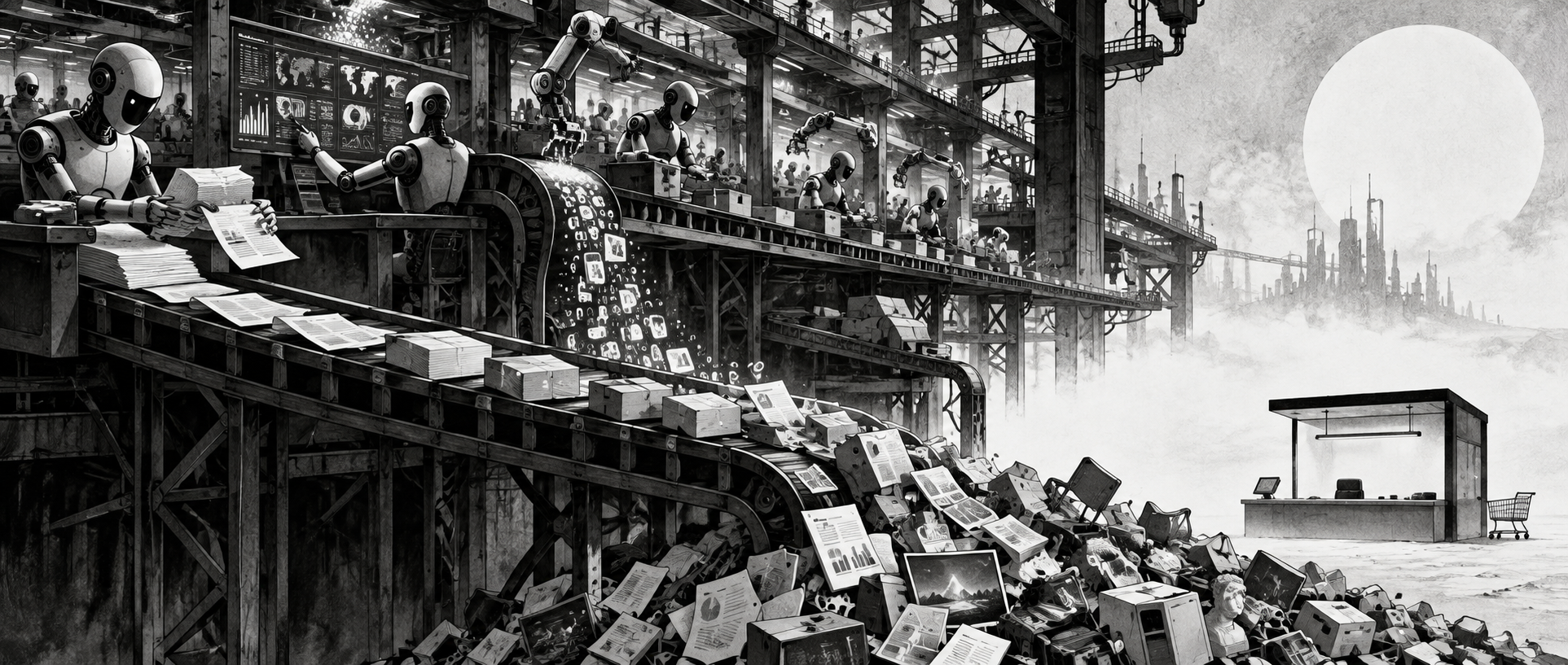
Doing business used to be less mysterious.
If competition gets too intense, you find ways to differentiate. If products aren't selling, you investigate whether the product, pricing, or channels are the problem. If you lack brand recognition, you build the brand and marketing. If old clients aren't renewing, you rework delivery and service.
Matching specific problems with specific solutions was the common sense of the past.
After AI came along, many companies skipped this step. Growth is lagging? Ask AI. Profits are bad? Ask AI. Products aren't selling? Blame AI. An abstract operational problem gets repackaged as an even more abstract "AI transformation" strategy before anyone bothers to break it down into concrete business issues.
It's just like the "industry + internet" trend from years ago, when every company had to build an online mall and make an app, desperate to look "very internet," while few seriously thought about what the internet actually is and how to truly become internet-based.
In my earlier piece, "+AI: Reliving the Fake Innovation Death Loop of 'Industry + Internet'," I described this approach as "putting an engine on a horse-drawn carriage"—everyone was busy strapping the internet onto themselves, rarely pausing for genuine self-examination or restructuring their business logic.
The current problem is that companies decide what technology to use before even figuring out what's wrong with their business. It's like advising the emperor to develop atomic bombs when the Qing army is already crossing the border.
Once a company treats AI as the answer, the first thing that disappears is the questioning of the problem itself. We start using tokens, efficiency gains, and layoffs to prove that AI is useful, but we might just be having increasingly efficient people continue doing things no one will pay for—turning the company's operational pressure into ordinary employees' productivity pressure.
Even Nuclear-Powered Workhorses Can't Make Customers Pay

There's no doubt AI can make employees more productive. But whether code is written faster, information is found more nimbly, or proposals and documents are produced like an assembly line, what it primarily solves is still the internal efficiency problem of the enterprise.
The 2026 government work report clearly placed expanding domestic demand in an important position, with "strong supply, weak demand" having become a prominent contradiction in current economic operations. This means that for many companies, the issue is no longer just how to produce faster, but whether anyone will buy what's produced.
Clients don't pay because of a nice weekly report, and users don't fall in love with an app because programmers wrote an extra ten thousand lines of code.
Once a company treats AI as the answer, it easily skips the questions of why business is getting harder and why customers aren't willing to pay.
Even if you replace employees with silicon-based staff or nuclear-powered workhorses, you won't conjure up an extra paying customer out of thin air.
AI can indeed take on some of the work previously done by humans, but the disappearance of a job doesn't prove it was replaced by AI. If demand is still there and AI takes over the work, that's substitution. If jobs disappear because demand has shrunk, and AI just helps the remaining people get more done, that's cost cutting.
When shrinking demand, corporate layoffs, and heavy adoption of AI tools happen at the same time, it's easy to retroactively tack on a causal relationship and make an "AI replaces people" narrative stick.
But companies can't expect to bolt a nuclear-powered engine onto their workhorses and solve the problem of no one buying what they're selling.